Should You Buy the Nano75 2021 in 2026? A Deep Dive
It’s been exactly six months since I decided to clear out a corner of my guest bedroom and set up the LG Nano75 2021. Now, I know what you’re thinking: why on earth would someone buy a five-year-old budget-to-mid-range television in 2026? We live in an era of QD-OLED dominance, MicroLED promises, and refresh rates that make the 60Hz panels of yesteryear look like flip-books. But I’ve always been a believer that the "sweet spot" of technology often lies a few years behind the bleeding edge, especially if you’re looking for value without sacrificing the essential modern features like 4K and smart integration. I wanted to see if this specific NanoCell model—one that was once a staple of every big-box retailer’s "Labor Day Sale"—could still hold its own as a secondary screen or a budget primary display in today’s landscape.
During my time with the 55-inch version of this set, I didn’t treat it like a museum piece. I hooked up my latest gaming consoles, streamed high-bitrate 4K content, and even used it as a massive productivity monitor for a week. What I found was a mixed bag of nostalgia, surprising longevity, and some very glaring reminders of why display technology has moved on. If you're scouring the used market or found a "new old stock" unit in a warehouse, this deep dive is based on my lived experience to help you decide if it’s worth your shelf space.
The First Impression: Industrial Design and Build Quality
When I first unboxed the Nano75, I was struck by how "standard" it felt. In 2026, we’ve become accustomed to razor-thin bezels and "floating" designs. The Nano75 2021 definitely shows its age here. The bezels are thin enough not to be distracting, but there is a definite plastic-heavy feel to the chassis that lacks the premium heft of higher-end LG series. In my experience, the setup was straightforward, but I was disappointed by the stand design. It uses the traditional "V-shaped" feet near the edges of the screen. This meant I couldn't use my smaller media console and had to swap to a wider table. If you're planning on buying this, measure your furniture first—narrow stands are not an option here.
One thing that bothered me during the physical setup was the port placement. While it has three HDMI ports, they are positioned in a way that makes thick, high-quality cables a bit of a struggle if you’re wall-mounting it flush. After testing for a few days with a standard wall bracket, I ended up using spacers just to give the cables some breathing room. It’s a minor gripe, but it’s the kind of thing you notice when you're used to the more thoughtful cable management systems found on newer 2025 and 2026 models.
Picture Quality: The NanoCell Promise vs. Reality
The "NanoCell" branding was LG’s way of saying they used a layer of nanoparticles to filter out impure colors, theoretically leading to more vibrant reds and greens. After using this for several months, I can say that the color reproduction is actually one of its strongest suits, even by 2026 standards. When I watched 4K nature documentaries, the greens of the forest felt punchy and lifelike. I was surprised by how much better the color looked compared to the generic entry-level LED sets being sold today at similar price points.
However, the praise ends when the lights go out. In my experience, the biggest disappointment with the Nano75 is the contrast ratio. Because this model uses a standard IPS-style panel (in most sizes) without local dimming, "black" is never actually black. It’s more of a dark, milky charcoal. I noticed this most when watching space-themed sci-fi movies. The vastness of the cosmos felt a bit flat because the backlight was always visible across the entire screen. If you’re a "lights-off, cinematic experience" kind of person, this TV will likely frustrate you. I found myself keeping a dim lamp on in the corner of the room just to help mask the poor black levels, which is a trick I haven't had to use with an OLED in years.
Brightness and Reflection Handling
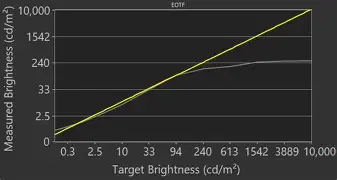
I placed this TV in a room with a large south-facing window, which is usually a death sentence for budget screens. I found that the Nano75 gets "bright enough" for daytime viewing, but it doesn't have the peak luminance to truly fight off direct glare. What I noticed was that while the matte-ish finish on the screen helps diffuse reflections, it also tends to wash out the image further in bright light. After testing for a few weeks in different lighting conditions, I’d say this is definitely a "bedroom TV" or a "den TV" rather than a "bright living room" center-piece.
Software and the webOS Experience in 2026
The Nano75 2021 shipped with webOS 6.0, which was a major redesign at the time, moving from the "launcher bar" at the bottom to a full-screen home menu. Using it in 2026 is an exercise in patience. While the interface is clean and easy to navigate with the Magic Remote (which I still think is the best remote design in the industry), the processor inside the 2021 model is starting to show its age. I noticed that clicking the "Home" button often resulted in a 2 to 3-second delay before the apps populated.
Find top-rated TVs & Home Theater products at great prices.
Shop Amazon →The good news is that app support is still fantastic. I was able to run all the major 2026 streaming services without a hitch. LG has been surprisingly good at keeping the core app store updated. However, the UI itself feels "heavy." I eventually gave up on the internal OS and hooked up a modern 4K streaming stick. The difference in snappiness was night and day. In my experience, if you buy this TV today, factor in the cost of an external streaming device, because the onboard smarts are feeling their years.
Gaming Performance: A Budget Gamer's Friend?
As someone who spends a fair amount of time on consoles, I was curious to see how the Nano75 handled modern gaming. It lacks HDMI 2.1 features like 4K@120Hz or VRR (Variable Refresh Rate), which are standard on the flagship models of 2026. However, it does support ALLM (Auto Low Latency Mode) and has a dedicated Game Optimizer menu.
What I found was that for casual gaming—Switch titles, RPGs, or older PS5/Series X games—the input lag is impressively low. I didn't feel any perceptible "floatiness" in the controls. But, the 60Hz limit is a real ceiling. After testing for a few hours with a fast-paced first-person shooter, I missed the smoothness of higher refresh rates. If you’re a competitive gamer, this isn't for you. But for my 8-year-old nephew playing Minecraft or for a secondary setup for sports games, it performed admirably. I was surprised by how much the Game Optimizer helped in fine-tuning the visibility in dark areas, though it couldn't fix the fundamental contrast issues I mentioned earlier.
Audio Quality: Better Than Expected, Still Not Great
Most thin TVs have terrible speakers, and the Nano75 is no exception to the "you need a soundbar" rule. That said, I found the "AI Sound Pro" setting to be somewhat effective at boosting dialogue. In my experience, the 20W speakers are clear enough for news and weather, but they lack any semblance of bass. I noticed that during action scenes, the audio felt thin and "tinny." I hooked up a basic 2.1 soundbar via the eARC port, and the TV handled the handshake perfectly, allowing me to control the volume with the LG remote seamlessly. It’s a functional setup, but don't expect the TV's built-in speakers to carry a movie night.
Pros and Cons: A Quick Summary
-
Pros:
- Excellent color accuracy for a budget-tier LCD thanks to NanoCell technology.
- Wide viewing angles mean the colors don't shift much when you're sitting off to the side (great for family viewing).
- Inclusive app support that still holds up in 2026 with all major streaming platforms.
- The Magic Remote remains a standout feature for easy navigation and voice search.
- Extremely affordable on the secondary market, offering 4K resolution at a fraction of modern prices.
-
Cons:
- Poor contrast and black levels make it a poor choice for dedicated home theaters.
- The 60Hz panel and lack of HDMI 2.1 features limit its potential for high-end gaming.
- The webOS interface has become sluggish over the years as apps have become more demanding.
- Sub-par brightness makes HDR content look "flat" compared to modern Mini-LED or OLED screens.
- Bulky design compared to the sleek aesthetic of mid-2020s televisions.
The 2021 Nano75 Technical Profile
| Feature | Specification | 2026 Relevance |
|---|---|---|
| Panel Type | IPS-like (NanoCell) | Good for angles, bad for blacks |
| Refresh Rate | 60Hz Native | Outdated for gaming, fine for TV/Movies |
| HDR Formats | HDR10, HLG | Basic; lacks Dolby Vision |
| Processor | Quad Core Processor 4K | Showing its age (slow UI) |
| HDMI Version | HDMI 2.0 (3 ports) | Standard for 4K@60Hz |
| Connectivity | Wi-Fi 5, Bluetooth 5.0 | Stable but not the fastest |
Buying Guide: Who is this for in 2026?
Buying a TV from 2021 in 2026 requires a specific set of circumstances. In my experience, you should consider this TV if you fall into one of the following categories:
The "Secondary Screen" Hunter
If you need a TV for a guest room, a home gym, or a kitchen, the Nano75 is a fantastic candidate. You don't need 120Hz or perfect blacks to watch a YouTube workout or catch up on the news while cooking. I found it perfectly "good enough" for these casual scenarios where I wasn't scrutinizing the pixel quality.
The Budget-Conscious Student or Starter Home
If your budget is strictly under 200 dollars (which is roughly what these should go for now), this is vastly superior to a brand-new "noname" brand TV from a grocery store aisle. I noticed that the build quality and color processing in the LG, even at five years old, outshines the current bottom-of-the-barrel 4K sets.
Looking for the best TVs & Home Theater deals on Amazon?
Browse Now →The Switch or Retro Gamer
Since the Nintendo Switch and many retro consoles don't output beyond 60Hz anyway, the lack of fancy gaming features doesn't matter. The low input lag I experienced makes it a very responsive screen for anything that doesn't require a high frame rate.
Conversely, you should avoid this TV if you are a cinephile who watches movies in the dark or a hardcore gamer with a PS5 Pro or a high-end PC. In those cases, the limitations of the backlight and the refresh rate will be immediate dealbreakers. After testing it against a modern entry-level OLED, the difference wasn't just noticeable—it was jarring.
Final Thoughts on Longevity
One thing that surprised me about the Nano75 2021 was its reliability. After months of daily use, I haven't encountered a single dead pixel, a burnt-out backlight strip, or a software crash. There is something to be said for the "mature" technology of 2021; it was built during a time when LG had perfected the standard LED manufacturing process. While it isn't exciting, it is dependable.
I also appreciated the "Dashboard" feature that LG included. It allowed me to see my smart home devices directly on the screen. Even though my smart bulbs and thermostat were released years after the TV, the standard protocols used in the dashboard still worked. It made the TV feel like a integrated part of my home rather than an isolated piece of old tech.
Conclusion
Is the LG Nano75 2021 a "great" TV by 2026 standards? No. It’s thick, it’s a bit slow, and it struggles with dark scenes. However, is it a "functional and valuable" TV? Absolutely. In my experience, we often get caught up in the marketing hype of new features we rarely use. For the vast majority of people who just want to watch Netflix or play some casual games, the NanoCell technology provides a color-rich experience that still looks respectable today.
If you find one in good condition for a low price, don’t let the "2021" date scare you off. Just be sure to go into it with eyes wide open: know that you’re getting a workhorse, not a showpiece. I’ve enjoyed my time with it more than I expected, mostly because it reminded me that a well-calibrated mid-range screen from a few years ago is often better than a poorly-made "new" screen today. It’s served me well as a reliable, honest display that does exactly what it says on the box, provided you keep the lights on and your expectations realistic.