5 Hidden Features of the Arctis Prime You Must Know About
Introduction
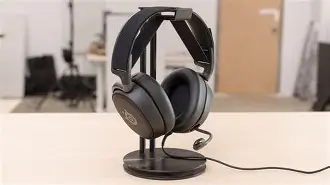
The SteelSeries Arctis Prime arrives as a purpose-built, no-frills headset aimed at competitive players and serious listeners who prefer wired simplicity over bundled software and digital signal processing. At first glance it looks like a stripped-down member of the Arctis family: a detachable boom mic, familiar ski-goggle headband, and closed-back earcups. Beneath that straightforward exterior, however, are several practical features and design choices that often go unnoticed by buyers but have outsized effects on everyday use. This article highlights five of those lesser-known aspects, explains why they matter in real-world scenarios, and offers a balanced review to help prospective buyers decide if the Arctis Prime fits their needs.
Why these hidden features matter
Buyers typically care about comfort during long sessions, microphone quality for communication, cross-platform compatibility, future-proofing through replaceable parts, and how a headset behaves with different playback chains (PC, console, mobile). The Arctis Prime delivers on several of these, but in ways that are subtle: the payoff comes from knowing how to use or pair the headset correctly rather than from a flashy spec sheet. The five features below are practical, actionable, and relevant whether the primary use is esports, streaming, podcasting, or casual gaming.
Hidden Feature 1 — Pure analog focus: low-latency, universal compatibility
One of the Arctis Prime’s most important but understated design decisions is its analog-first approach. There is no built-in USB DAC or proprietary wireless system to manage. Instead, the Prime relies on a straightforward 3.5mm connection and detachable cables. That simplicity produces two key advantages:
- Minimal latency: For competitive play where split-second audio cues matter, a fully analog signal path avoids the processing and buffering that can introduce latency on USB or wireless solutions.
- Broad compatibility: The 3.5mm interface works across PCs, consoles, controllers, handhelds, and phones without driver installs. For mixed-platform households or tournament setups, this reduces setup time and troubleshooting.
Real-world use case: a tournament player bringing the headset to LAN events can plug into venue mixers, consoles, or a teammate’s PC without hunting for drivers or dig into audio device settings. Likewise, streamers who use an external audio interface or mixer often prefer analog headsets because they can control routing and monitoring at the hardware level.
Hidden Feature 2 — Serviceability and parts interchangeability
Unlike many gaming headsets that are difficult to repair, the Arctis Prime follows the Arctis family’s user-friendly mechanical design. Earcups, cushions, and the suspension headband are replaceable, and the detachable boom mic can be swapped without special tools. The practical outcomes are subtle but meaningful:
- Extended lifespan: Worn pads or a tired headband do not necessitate replacing the whole headset; inexpensive replacements restore comfort and fit.
- Customization potential: Owners can swap in thicker memory-foam pads or different cushion materials to tune comfort and isolation for long sessions.
Real-world use case: an esports coach who uses the same headset for daily practice and travel can refresh cushions seasonally. A content creator can choose pads that favor isolation in noisy home setups or airier fabric for long edit days.
Hidden Feature 3 — Microphone versatility beyond the obvious
The Arctis Prime ships with a detachable bidirectional boom microphone that, while marketed for gaming, has qualities that serve other creators. The mic’s physical design and polar pattern offer focused pickup and good rejection of off-axis noise without relying on software noise suppression. Two practical implications:
Find top-rated Audio & Headphones products at great prices.
View Offers →- Plug-and-play voice clarity: With analog connectivity, the mic will function with consoles and mobile devices immediately, making it useful for interviews, quick voiceovers, or remote meetings when a dedicated microphone isn’t available.
- Easy third-party integration: Because the mic is detachable and uses a standard connection on the headset, it is straightforward to replace with a different boom or to pair the headset with a dedicated tabletop mic for higher-fidelity recording.
Real-world use case: a streamer who travels may use the Arctis Prime’s boom mic in console tournaments and then plug a USB desktop mic into the streaming PC at home—keeping voice consistency while upgrading capture fidelity when needed.
Hidden Feature 4 — Tuning optimized for competitive clarity, not theatrical bass
The Arctis line is known for a balanced, clarity-focused presentation rather than heavy, consumer-style bass. The Prime continues that trend: its drivers and tuning emphasize clear mids and controlled lows so that footsteps, voice, and directional cues sit forward in the mix. For buyers this means:
- Actionable in-game audio: Competitive players often prefer a neutral, precise profile that surfaces positional information over exaggerated low-end rumble.
- Easy to tailor with EQ: Because the baseline tuning is relatively neutral, modest equalization adjustments in software or on a mixer yield predictable and musical results.
Real-world use case: players who rely on audio for positional awareness report being able to hear footsteps and gunfire positioning more clearly with a neutral headset and a modest boost around the 2–6 kHz range. Conversely, owners who prefer heavy bass for single-player experiences may choose to add an outboard EQ or use their system’s sound enhancements.
Hidden Feature 5 — Practical ergonomics for long sessions
At first glance the Prime’s suspension headband and AirWeave-style ear cushions are familiar; their true advantage is in session endurance. The headset trades heavy clamping pressure for a balanced weight distribution that reduces hot spots and fatigue, especially during marathon gaming or editing sessions. Practical benefits include:
- Predictable comfort: The ski-goggle headband self-adjusts to head shape, reducing the need for constant position shifting mid-session.
- Breathability: Air-weave-like fabrics on the pads avoid the heat accumulation of dense leatherette, helpful in warm rooms or under studio lighting.
Real-world use case: an editor or competitive player using the headset for 4–8 hour blocks will typically experience less pressure on the top of the head and fewer ear hot spots than with a tight clamping alternative, translating to improved focus and fewer interruptions.
Detailed Product Review and Analysis
The Arctis Prime positions itself as a competitive, wired alternative in a market saturated with feature-laden wireless and USB-enabled headsets. Its straightforward hardware-first philosophy means the product’s merits are most apparent when evaluated in the contexts that competitive and serious users prioritize: latency, clarity, durability, and comfort.
Build and materials: the Prime uses a combination of metal and reinforced plastics in strategic areas, keeping weight modest while maintaining structural resilience. The suspension headband provides a forgiving fit for varied head shapes. While not as premium feeling as metal-only high-end models, the construction is robust for daily transport and tournament use.
Discover deals on Audio & Headphones — updated daily.
See Deals →Sound quality: the Prime’s presentation is tuned for clarity. Mids and vocals are upfront; spatial cues are well-defined for stereo playback. Bass is present but controlled—suitable for clarity-first listening rather than bass-first consumer audio. This makes the headset particularly effective for FPS, MOBA, and competitive titles where auditory cues are mission-critical.
Microphone: the bundled boom is one of the best “out of the box” mics in analog gaming headsets. It prioritizes speech clarity with a directional focus, reducing background room noise better than many omnidirectional built-in mics. Because it is detachable and uses a standard mechanical plug into the earcup, it is easy to replace or to remove for mobile use.
Connectivity and real-world flexibility: the analog cable approach ensures seamless compatibility with console controllers, many mixers, and mobile devices. Some owners may prefer the control fabrics of USB software suites; the Prime’s philosophy avoids software dependency so that the headset behaves predictably across devices. When used with a quality external DAC or amplifier, the Prime benefits from improved dynamics and headroom—another advantage for users who already own audio gear.
Performance in common scenarios
- Competitive gaming: Excellent. Clear mids and responsive transient behavior help with positional audio.
- Streaming and content creation: Good. The boom mic offers acceptable capture for streaming; however, content creators seeking broadcast-quality vocal capture may still prefer a dedicated condenser or dynamic microphone on a desktop arm.
- Console play: Excellent. Plug-and-play functionality with controllers makes setup fast and consistent.
- Music listening: Very good for neutral-leaning listeners; those seeking a warm, bass-heavy signature may want to use EQ.
Pros & Cons
- Pros
- Low-latency analog connection ideal for competitive play
- Replaceable cushions and detachable mic increase longevity and versatility
- Comfort-oriented suspension headband for long sessions
- Neutral, clarity-focused tuning that surfaces important in-game cues
- Strong out-of-the-box mic performance for an analog boom
- Cons
- No onboard USB DAC or wireless option included—less convenient for users who want software EQ or wireless freedom
- Sound signature may be too neutral for bass-focused listeners without additional EQ
- Lacks some advanced “gaming” features like virtual surround processing unless added via the host device
- Replacement parts are available, but sourcing them may be less straightforward than for mainstream consumer brands
Comparison Table: Arctis Prime vs. Nearby Alternatives
| Model | Connection | Key Difference | Best for |
|---|---|---|---|
| Arctis Prime | Wired 3.5mm (detachable) | Analog-first, neutral tuning, detachable boom mic | Competitive players and users who prefer low latency and cross-platform compatibility |
| Arctis Pro | USB DAC + 3.5mm | Includes Hi-Res capable DAC and enhanced audio processing | Audition-focused users and audiophiles who want USB DSP and higher-resolution playback |
| Arctis 7 | Wireless (2.4 GHz) + 3.5mm | Wireless convenience with on-ear controls and base station | Users who prioritize freedom of movement over wired simplicity |
| Arctis 1 | Wired 3.5mm | Entry-level price with simpler build and fewer comfort refinements | Budget buyers and occasional gamers |
Buying Guide: Is the Arctis Prime the Right Choice?
Prospective buyers should align the headset’s core strengths with personal priorities. The Arctis Prime is most compelling when low latency, durability, and neutral-sounding clarity matter more than convenience features like wireless or integrated software suites. Use the checklist below to assess fit.
Who should consider the Arctis Prime?
- Competitive and tournament players: The low-latency analog approach and clear positional audio make it an excellent choice for fast-paced multiplayer titles.
- Cross-platform households: Anyone who switches between PC, console, and mobile devices will appreciate the predictable 3.5mm compatibility.
- Owners of external audio gear: If a DAC, mixer, or audio interface is already part of the setup, the Prime pairs well and benefits from better source quality.
- Long-session users: Comfort-oriented engineering reduces fatigue for streamers, editors, and marathon gamers.
Who might prefer another model?
- Users who want wireless freedom: Consider wireless models like the Arctis 7 or other Bluetooth/wireless headsets for living-room play.
- Those who want built-in DSP/EQ control: If system-level software and onboard DSP are priorities, a USB DAC-equipped headset (e.g., Arctis Pro) or a headset with a dedicated app may be preferable.
- Music-first listeners: Listeners who prioritize a warm, bass-forward sound out of the box may prefer headsets tuned with more bass or consider pairing the Prime with EQ adjustments.
Practical checklist before purchase
- Confirm primary devices and whether a 3.5mm connection is available or if a TRRS adapter/splitter will be needed.
- Decide whether a detachable boom mic is sufficient or if a dedicated external microphone is planned for streaming/recording.
- Inspect replacement part availability (cushions, headband) for longevity considerations.
- Consider an audition or return window to verify comfort for extended sessions, especially for users with larger head sizes or glasses.
Conclusion
The SteelSeries Arctis Prime is best understood not as a headset chasing feature checkboxes, but as a focused tool for clarity, comfort, and compatibility. Its five “hidden” strengths—analog-first architecture, serviceability, mic versatility, competitive tuning, and thoughtful ergonomics—translate into tangible advantages in tournament play, mixed-device households, and long creative sessions. Buyers whose priorities align with low latency, predictable cross-platform behavior, and the option to upgrade or replace parts will find the Arctis Prime a sensible, long-lived choice. For those who need wireless freedom, built-in DSP, or a studio-grade microphone out of the box, alternate Arctis models and accessories will be more appropriate. In short, the Prime rewards owners who value a durable, neutral-sounding headset and who appreciate that sometimes the most useful features are the ones that quietly make everyday use easier.